
SWS
Custom Business Software for Smarter Business Operations
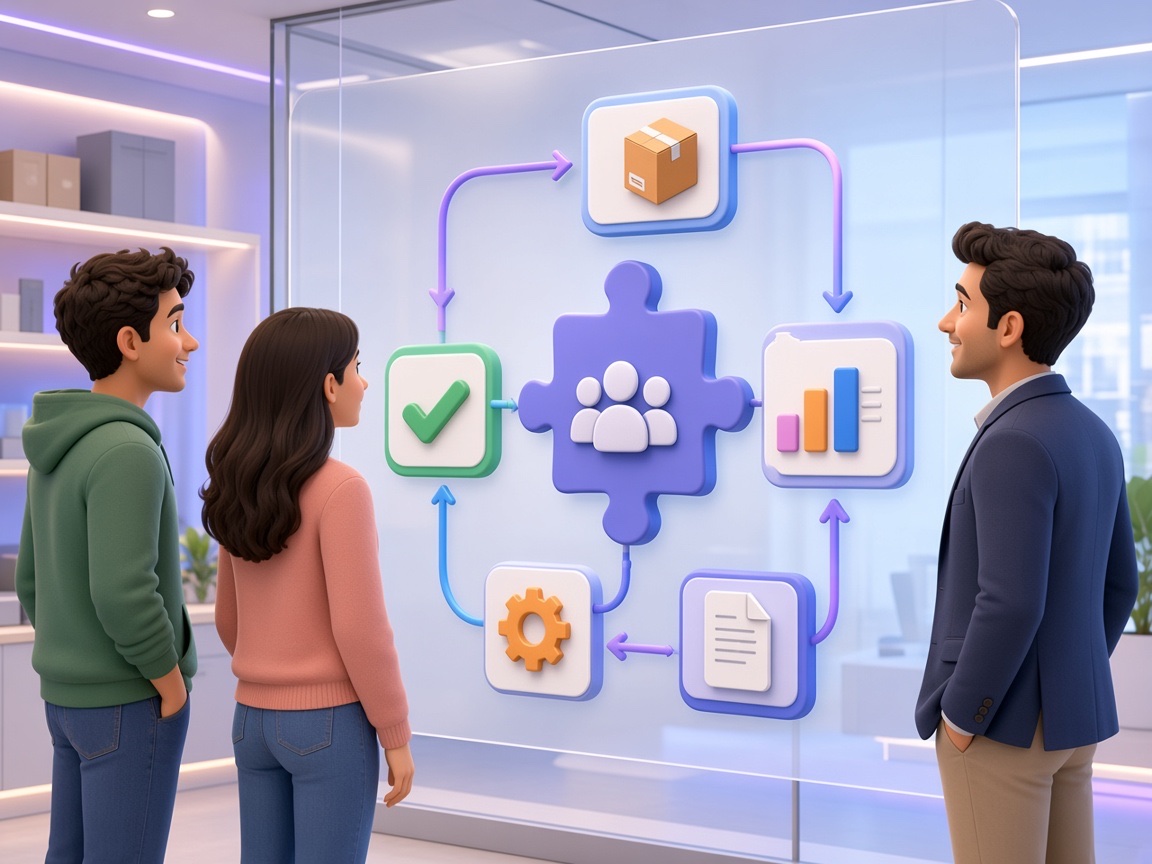
Many businesses rely on spreadsheets, disconnected tools, and manual processes to run daily operations. This often leads to repeated data entry, delayed approvals, and reports that take longer to compile than they should. Custom Business Software solves this by bringing your workflows, data, automation, and reporting into one connected system built around how your business actually operates. This page covers what custom business software is, how it works, its features and benefits, and how Swami Webcraft Solutions approaches development.
What Is Custom Business Software?
Custom Business Software is software designed and developed around the specific processes, requirements, users, and workflows of a business, rather than requiring the business to adapt to a fixed, one-size-fits-all package.
Depending on requirements, it can support business operations, workflow management, data management, reporting, user management, approvals, customer management, inventory, finance-related workflows, internal communication, and automation within a single connected system.
How Does Custom Business Software Work?
Building custom business software follows a structured process:
-
Understanding business requirements through stakeholder discussions
-
Mapping existing workflows to identify gaps
-
Identifying automation opportunities
-
Planning system architecture suited to the scale of operations
-
Designing the user interface around how the team works
-
Developing required modules based on priority
-
Integrating third-party systems such as accounting or CRM tools
-
Testing across different use cases and user roles
-
Deploying with minimal disruption to daily operations
-
Maintaining and improving the software as needs evolve
Key Features of Custom Business Software
The exact feature set depends on your business's actual requirements not every project needs every feature:
- Custom dashboards for at-a-glance visibility
- Workflow management to route tasks and approvals
- User roles and permissions for controlled access
- Customer management for tracking interactions
- Employee management for internal records
- Inventory management for stock tracking
- Billing and invoicing for finance operations
- Approval workflows to remove manual follow-ups
- Document management for centralized storage
- Reports and analytics for informed decisions
- Notifications and alerts to keep teams updated
- Multi-branch management for multiple locations
- API and third-party integrations
- Cloud-based access for remote usability
- Data security through controlled access
Benefits of Custom Business Software
A well-planned business management software solution can offer practical, day-to-day advantages:
- Reduce repetitive manual work
- Improve data organization
- Speed up access to business information
- Improve workflow visibility
- Support better reporting
- Simplify team collaboration
- Manage user access with greater control
- Scale functionality as requirements change
Types of Custom Business Software
Custom software can take several forms depending on the problem being solved:
-
CRM Software
managing leads, customer interactions, and follow-ups
-
ERP Software
connecting finance, inventory, and operations
-
Accounting Software
handling invoicing, expenses, and records
-
POS Software
managing sales at retail or service counters
-
Inventory Management Software
tracking stock across locations
-
HRMS Software
managing employee records, attendance, and payroll data
-
Project Management Software
organizing tasks, timelines, and teams
-
Business Workflow Software
automating approvals and routine processes
-
Industry-Specific Software
built around sector-specific needs
-
Internal Operations Software
supporting administrative tasks
Custom Business Software vs Ready-Made Software
| Factor | Custom Software | Ready-Made Software |
|---|---|---|
| Customization | Built around your workflows | Fixed feature set |
| Implementation | Requirement-driven | Usually faster |
| Investment | Typically higher upfront | Usually lower upfront |
| Integrations | Designed around your systems | Depends on supported integrations |
| Scalability | Built around your requirements | Depends on vendor |
| User Experience | Tailored to users | Generally standardized |
| Flexibility | Adaptable to changing needs | Depends on vendor updates |
Ready-made software can work well for businesses with standard requirements. A tailored software approach becomes useful when existing solutions don't fit specific workflows or reporting needs.
Why Choose Custom Business Software?
Businesses often consider a custom software solution when they have unique workflows, industry-specific requirements, custom approval chains, or specialized reporting needs that off-the-shelf tools can't accommodate. It's also relevant for businesses managing multiple departments or branches, facing the limitations of existing software, or needing several systems to work together. The focus should always be on solving actual business problems rather than adding features for their own sake.
Custom Business Software Development Services
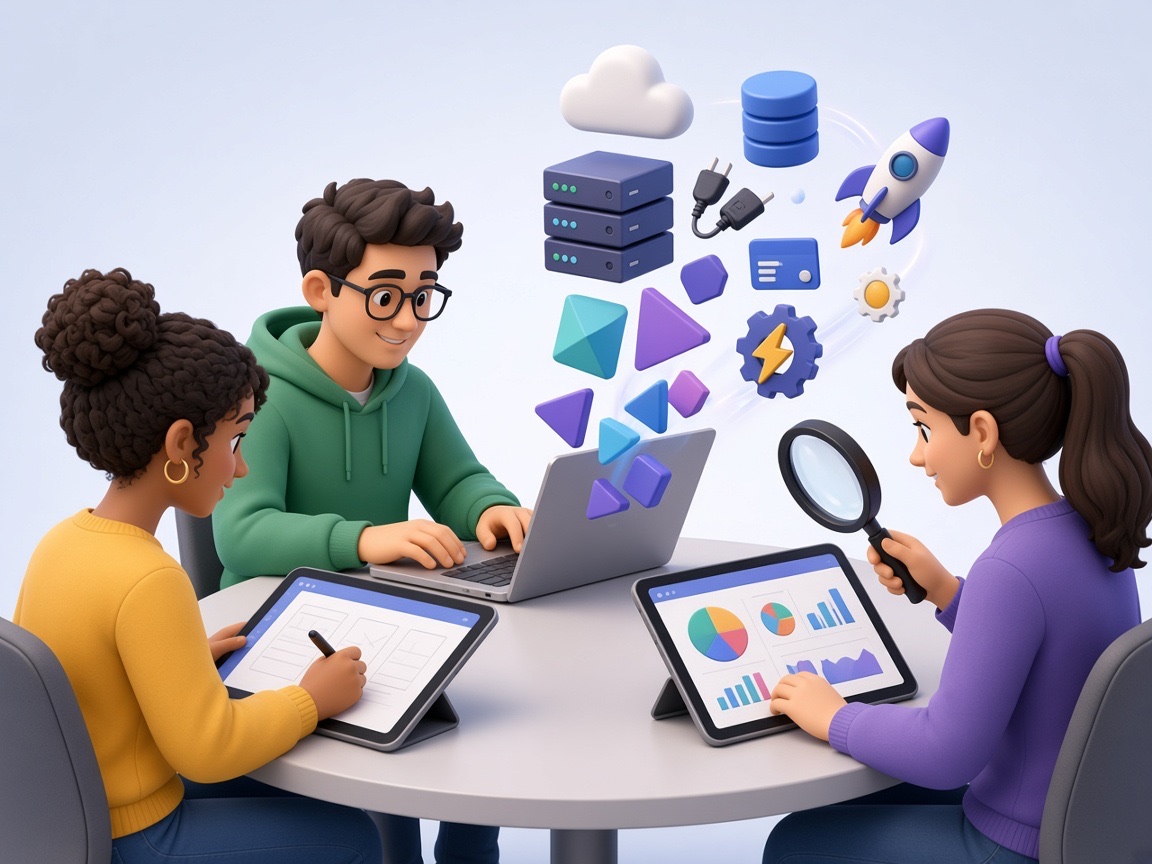
Our Custom Business Software Development Services cover the full lifecycle of building and maintaining business systems:
- Business requirement analysis
- Custom software development
- Web and mobile application development
- UI/UX design
- Software customization
- API development and third-party integration
- CRM/ERP integration
- Payment integration
- Data migration
- Workflow automation
- Cloud software development
- Testing and quality assurance
- Deployment, maintenance, and support
Our Custom Business Software solutions can be designed around specific workflows, user roles, reporting requirements, and integration needs, so the final system supports how your team actually works.
Industries That Can Use Custom Business Software
-
Healthcare
patient workflows, appointment management, billing, and reporting
-
Retail
inventory tracking, POS operations, and customer data management
-
Manufacturing
production tracking, inventory, and vendor coordination
-
Real Estate
property listings, client follow-ups, and document management
-
Education
student records, admissions workflows, and communication
-
Logistics
shipment tracking, route planning, and delivery records
-
Construction
project tracking, vendor management, and budgeting
-
Hospitality
booking management, guest records, and billing
-
Professional Services
client management, billing, and task tracking
-
IT & Software
internal tools, ticketing, and project workflows
Business Software Integrations
Custom software for business operations can connect with systems you already use, including CRM, ERP, accounting software, POS systems, payment gateways, e-commerce platforms, HRMS, inventory systems, banking APIs where applicable, email and SMS platforms, websites, and mobile applications. Integration capability depends on the availability and functionality of the relevant APIs or platforms.
Cloud-Based Custom Business Software
Cloud-based deployment allows remote accessibility, centralized data, and multi-user or multi-branch access from a single system. It supports easier collaboration, centralized updates, and role-based access control. Backup planning should be part of any cloud deployment, and while cloud infrastructure includes strong security practices, no system can be guaranteed completely risk-free.
How to Choose the Right Development Approach
- Define the specific business problem you're solving
- Identify who will use the system and how
- Map current workflows before designing new ones
- Prioritize essential features over nice-to-haves
- Identify required integrations early
- Consider future scalability needs
- Define security and access requirements
- Decide whether web, mobile, or both are needed
- Set a realistic budget and timeline
- Plan for ongoing maintenance and support
Why Choose Swami Webcraft Solutions?
Swami Webcraft Solutions is a Custom Business Software Development Company in Navi Mumbai, focused on building software around specific business workflows and operational requirements. Our approach includes requirement analysis, custom development, scalable architecture, thoughtful UI/UX, API integrations, workflow automation, cloud solutions, and web and mobile applications, backed by ongoing maintenance and support. We build software around real operational needs rather than promising outcomes we can't guarantee, keeping the focus on delivering reliable, maintainable systems that genuinely fit how your business works.


Custom Business Software is software built around a specific business's processes and requirements rather than a generic package. It typically supports operations, data management, reporting, and automation tailored to how that business functions.
Businesses often need custom software when off-the-shelf tools don't fit their workflows, reporting needs, or approval structures. It's especially relevant for businesses with unique processes or requirements generic software can't accommodate.
Ready-made software offers a fixed feature set for general use, while custom software is built specifically around your workflows. Ready-made tools are faster to implement; custom solutions offer more flexibility for specific needs.
Costs vary depending on scope, features, integrations, and complexity. A clear picture of pricing typically comes after understanding your specific requirements, which is why an initial discussion is usually the first step.
Timelines depend on the number of features, integrations, and modules required. Simple systems may take a few weeks, while complex, multi-module software can take several months from planning through deployment.
Yes, provided the relevant APIs or platforms support integration. Custom business software can generally connect with CRM, ERP, accounting, POS, and other systems, with feasibility assessed during planning.
Yes. Custom software can be built to address the specific workflows and requirements of a particular industry, such as healthcare, retail, manufacturing, or logistics, rather than relying on generic tools.
Yes, custom business software can be designed for multi-branch operations, including centralized data, branch-specific access, and consolidated reporting, depending on how the system is structured.
It can be designed with scalability in mind, allowing new features, users, or modules to be added as the business grows. The level of scalability depends on how the initial architecture is planned.
Cloud-based software can include strong security practices such as access control, encryption, and regular backups. However, no system can be guaranteed 100% secure, and security should be treated as an ongoing responsibility.
Looking for Custom Business Software Built Around Your Workflow?
If manual processes or disconnected tools are slowing your business down, it's worth discussing your current workflows and requirements with our team.
Share your business requirements with our team and discuss a custom software solution designed around your workflows, integrations, and future growth needs.