
SWS
Accounting Software Development for Smarter Financial Management
Introduction
Most growing businesses start their accounting journey with spreadsheets, and that works until it doesn't. Manual bookkeeping, scattered financial records, delayed invoice tracking, and repetitive data entry start to slow teams down, especially when cash flow needs to be checked in real time. This is where accounting software becomes valuable it brings invoices, expenses, payments, and reports into a single organized system. As an accounting software development company in Navi Mumbai, Swami Webcraft Solutions works with businesses to build accounting systems that reflect how their finance teams actually work, not a generic template forced onto their processes.
What Is Accounting Software?
Accounting software is a digital system that helps businesses record, organize, manage, and analyze financial transactions income, expenses, invoices, payments, reports, tax-related data, and customer or vendor transactions in one place. Basic accounting records simply capture what came in and what went out. Accounting management software goes further, connecting those records to invoicing, accounts receivable and payable, and reporting, so finance teams see the full financial picture rather than isolated numbers.
Types of Accounting Software
Not all accounting software serves the same purpose. Understanding the main types helps in choosing the right fit:
-
Small Business Accounting Software
simple invoicing, expense tracking, and reporting for lean teams with straightforward needs
-
Cloud-Based Accounting Software
hosted online for remote access, multi-user collaboration, and centralized data
-
Enterprise Accounting Software
built for high transaction volumes, multiple departments, and complex approval structures
-
Custom Accounting Software
designed around a specific business's workflows, integrations, and reporting requirements
-
Industry-Specific Accounting Software
tailored to sector-specific needs, such as commission tracking in real estate or billing cycles in healthcare
Most businesses eventually outgrow one type and move toward another as their transaction volume, team size, or reporting needs change.
How Does Accounting Software Work?
Most accounting software follows a similar underlying workflow:
- Recording transactions as sales, purchases, or payments happen
- Creating and sending invoices directly from the system
- Categorizing income and expenses
- Managing accounts receivable and accounts payable
- Tracking payment status across invoices
- Recording GST-related workflows and tax-relevant data
- Reconciling records against bank statements
- Generating reports such as profit and loss statements
- Using that data to guide budgeting and business decisions
Automation reduces manual re-entry at nearly every step above. This explains how the software functions — it isn't a substitute for advice from an accountant or tax professional.
Key Features of Accounting Software
-
Invoicing and Billing
create and send professional invoices without manual formatting
-
Expense Management
categorize spending so patterns are visible, not buried in receipts
-
Income Tracking
record revenue tied to specific customers or projects
-
Accounts Receivable & Payable
know what's owed to you and what you owe, with fewer missed follow-ups
-
Payment Tracking
see payment status across every invoice in real time
-
GST and Tax-Related Workflows
organize GST-related workflows and tax-relevant data in a structured, exportable format
-
Financial Reporting
generate profit and loss statements, balance sheets, and custom reports
-
Cash Flow Tracking and Dashboard
get a visual summary of financial health at a glance
-
User Roles and Permissions
control who can view, edit, or approve financial data
-
Data Security
protect sensitive financial information with access controls
-
API & Third-Party Integrations
connect accounting data with CRM, ERP, payment, or e-commerce systems
Benefits of Accounting Software for Businesses
Centralized records, faster invoicing, and fewer manual errors are the most immediate gains but the bigger shift is in visibility. Finance teams get faster access to accurate numbers, collaborate more easily across departments, and can scale the system as transaction volume grows, instead of relying on delayed, fragmented spreadsheets. The actual impact still depends on how well the software fits existing workflows.
Custom Accounting Software vs Ready-Made Accounting Software
Ready-made accounting software offers faster setup, lower upfront cost, and standard features suited to businesses with conventional workflows.
Custom accounting software is built around a business's specific processes unique approval chains, industry-specific reporting, or multi-branch operations and takes longer to build but adapts to workflows off-the-shelf tools weren't designed for.
Neither is universally better; the right choice depends on how standard or specialized your accounting workflows are.
Why Choose Custom Accounting Software?
Custom development makes sense when standard software doesn't fit. Through custom software development, businesses can get custom invoice formats, industry-specific workflows, automated approval processes and payment reminders, business-specific dashboards and reports, user-specific permissions, multi-branch accounting, and integrations with ERP software or CRM software for connected data. The goal is software that mirrors how the business already operates.
Accounting Software Development Services
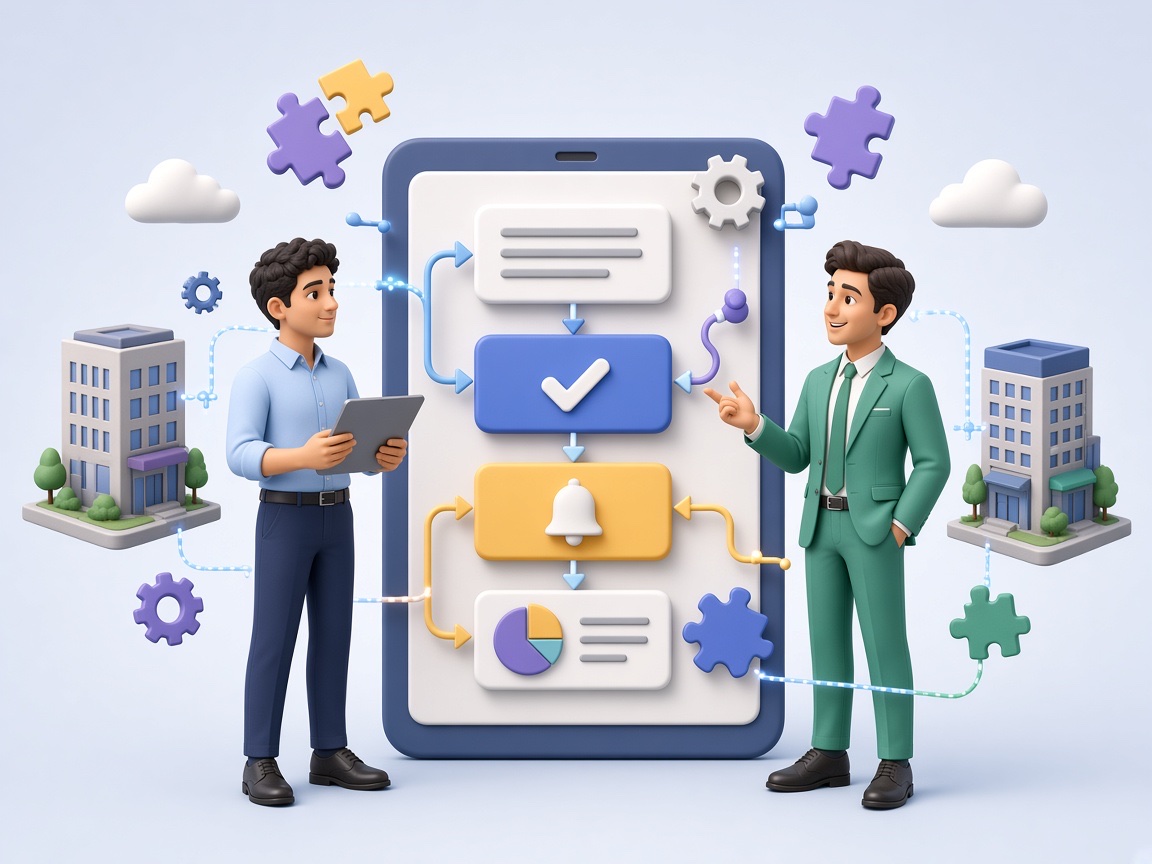
Our work begins by understanding a business's actual accounting workflows, users, integrations, and reporting needs before development starts. Services include custom accounting software development, accounting web and mobile app development, UI/UX design, software customization, API integration, data migration, workflow automation (including AI & ML automation for repetitive tasks), cloud accounting solutions, and ongoing maintenance and support.
Industries That Can Benefit From Accounting Software
-
Real Estate
tracking commission payouts and property-linked vendor payments alongside client invoicing
-
Healthcare
reconciling patient billing with insurance payments and recurring operational expenses
-
Manufacturing
matching purchase orders and vendor payments against production cost reports
-
Retail
linking sales transactions with inventory-based expense tracking
-
Education
managing fee collection cycles alongside vendor and staff-related payments
-
IT & Software
handling recurring project billing and milestone-based client invoicing
-
Professional Services
tracking retainers, hourly billing, and expense reimbursements
-
Construction
managing milestone billing against contractor and material payments
-
Logistics
reconciling fuel and operational costs with delivery-linked billing
-
Hospitality
handling daily billing reconciliation across multiple revenue streams
Accounting Software Integrations
Accounting software rarely works in isolation it often connects with CRM and ERP systems, payment gateways, banking systems where applicable, e-commerce and payroll platforms, inventory management tools, websites, mobile apps, and business analytics platforms. These integrations reduce duplicate data entry, though availability depends on the specific systems involved.
Cloud-Based Accounting Software
Cloud-based accounting software stores financial data on remote servers, enabling remote access, multi-user collaboration, and centralized updates instead of manual installs across devices. Security still depends on fundamentals like authentication, access control, and regular backups — no system is completely secure, but proper safeguards reduce risk significantly.
How to Choose the Right Accounting Software
Evaluate against actual requirements rather than the longest feature list: number of users, essential features, invoicing volume, reporting needs, GST-related workflows, required integrations, security standards, scalability, customization level, mobile access, support expectations, and budget. Matching software to real workflows tends to produce better long-term results than choosing on feature count alone.
Why Choose Swami Webcraft Solutions?
Swami Webcraft Solutions is an accounting software development company in Navi Mumbai that starts with how a business's finance team actually works before writing any code. Our approach is requirement-focused: custom solutions over templates, scalable architecture, UI/UX-focused development, API and third-party integrations, automation, cloud-based delivery, and ongoing support after launch. We focus on building accounting systems that are reliable, practical, and built to scale with your business as transaction volume and requirements grow.

FAQ
Frequently Asked Questions About Accounting Software

Still have questions?
Accounting software is a digital system that helps businesses record, organize, and manage financial transactions such as income, expenses, invoices, and payments, replacing manual registers and spreadsheets with a centralized, searchable system.
It reduces manual data entry, centralizes financial records, and speeds up invoicing and payment tracking, giving businesses clearer visibility into cash flow and reporting.
At minimum, invoicing, expense management, income tracking, accounts receivable and payable, financial reporting, and payment tracking. Additional features like dashboards and integrations depend on business needs.
Custom accounting software is built around a specific business's workflows, such as unique invoice formats or industry-specific reporting, unlike ready-made software designed for general use.
Cost depends on required features, complexity, number of users, integrations, customization, and security requirements. A clear estimate needs a defined project scope.
Timelines vary based on platform, feature set, integrations, and customization simpler systems take less time than those with multiple integrations.
Yes, though actual integration capability depends on the specific systems involved and technical compatibility.
Yes invoicing, reporting, and approval processes can be tailored to match how a specific industry operates, such as commission tracking for real estate.
By centralizing financial data, automating repetitive tasks, and giving real-time visibility into income, expenses, and cash flow, helping businesses make faster, better-informed decisions.
Discuss Your Accounting Software Requirements With Our Team
Every business handles invoicing, expenses, and reporting a little differently. Talk to Swami Webcraft Solutions about your accounting workflows, required features, integrations, and automation needs we'll help you figure out what actually fits.
Swami Webcraft Solutions Pvt. Ltd.