
SWS
From Leads to Loyal Customers - CRM Development Company in Navi Mumbai
Businesses that rely on spreadsheets, WhatsApp chats, and disconnected notebooks to manage leads and customers usually hit a wall as they grow, follow-ups get missed, customer history gets lost, and sales teams end up chasing information instead of chasing deals. A Customer Relationship Management (CRM) system solves this by bringing leads, customer records, communication history, and sales tracking into one connected platform.
As a CRM Development Company in Navi Mumbai, Swami Webcraft Solutions builds custom CRM software around how a business actually manages its customers and sales pipeline, rather than fitting the business into a rigid, pre-built template. Whether it's a sales team in Vashi that needs structured lead tracking, a service business that needs automated follow-ups, or an enterprise that needs a CRM connected across departments, custom CRM development gives businesses direct control over their customer data and sales process.
What Is CRM Development?
CRM development is the process of building software that helps businesses organize, track, and manage interactions with leads and customers from the first point of contact through to a closed sale and ongoing relationship.
A CRM system typically centralizes:
- Lead and contact records, along with their source and status
- Communication history across calls, emails, and messages
- Sales pipeline stages and deal tracking
- Follow-up reminders and task scheduling
- Reports on sales performance and customer activity
Generic, off-the-shelf CRM tools can work for very basic needs, but they often come with pricing tiers, unused modules, and workflows that don't match how a specific sales team actually operates. Custom CRM software development is built around the business's own sales stages, customer categories, and reporting needs, which is the foundation of the work we do as a CRM Software Development Company in Vashi.
Custom CRM Software Development Services
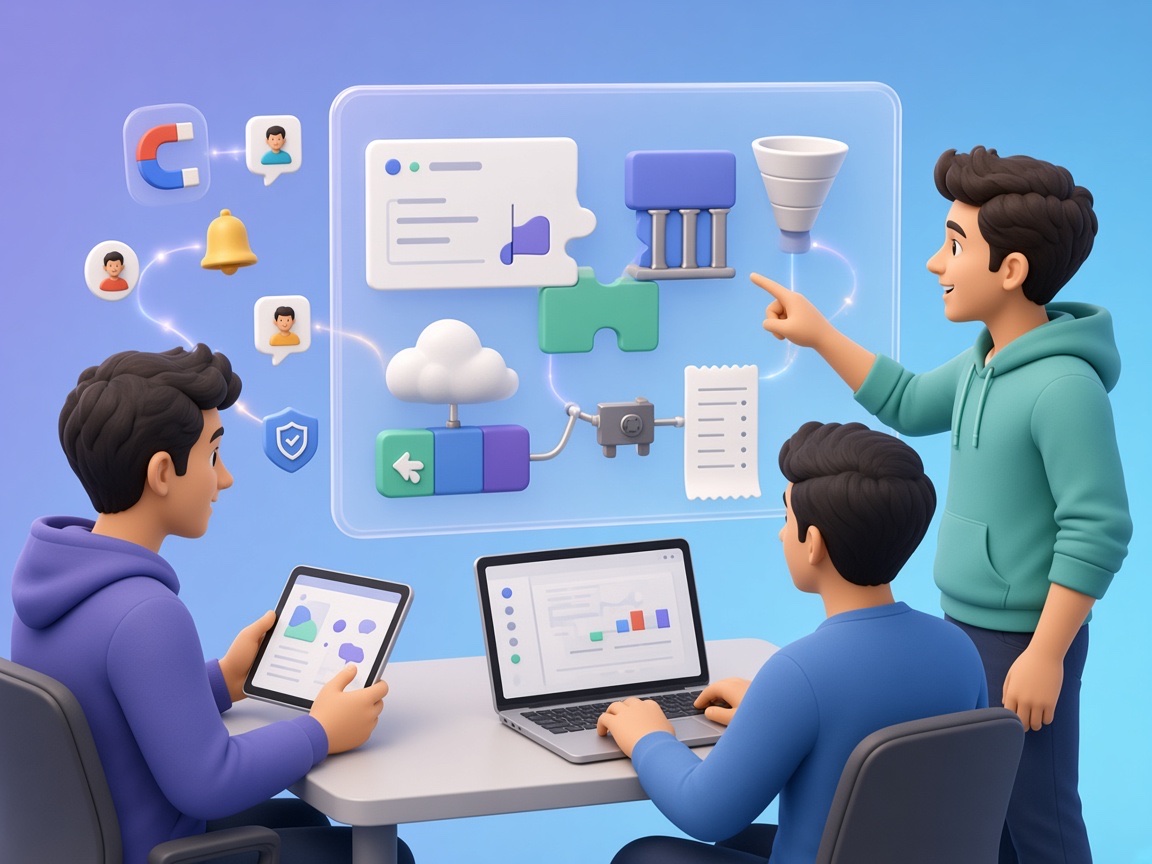
Our CRM Development Services are built around the specific function each business needs, rather than a single one-size-fits-all product. Depending on the requirement, this can include:
-
CRM Software Development
A core CRM system built from the ground up around a business's sales and customer workflows.
-
CRM Integration
Connecting the CRM with existing business tools such as accounting software, billing systems, marketing platforms, or communication channels, so data doesn't need to be entered twice.
-
CRM Customization
Modifying or extending an existing CRM's fields, stages, permissions, and reports to match a business's actual process, rather than working around a fixed structure.
-
Sales CRM Development
A CRM focused specifically on sales pipeline management, deal stages, targets, and sales team performance tracking.
-
Lead Management Software
Capturing, organizing, and routing leads from multiple sources, with tracking for follow-ups and conversion status.
-
Customer Management Software
Centralized customer profiles, purchase history, and interaction records for businesses focused on long-term customer relationships.
-
CRM Automation
Automating repetitive tasks such as follow-up reminders, lead assignment, status updates, and notification triggers, reducing manual sales-team workload.
-
Cloud CRM Development
A CRM accessible from anywhere, suited to teams working across multiple locations or on the move.
-
Enterprise CRM Development
Larger-scale CRM systems built for organizations that need multi-department access, advanced permissions, and integration across several business systems.
Key Features of Custom CRM Software
The right feature set depends on the business, but most custom CRM systems we build include some combination of:
- Lead capture and centralized contact management
- Sales pipeline and deal-stage tracking
- Task and follow-up scheduling with reminders
- Role-based access for sales, support, and management teams
- Communication logging across calls, emails, and messages
- Automated workflows for lead assignment and status updates
- Reporting dashboards for sales and customer activity
- API and third-party integration with existing business tools
- Customer segmentation and categorization
- Data security and structured database management
Technologies We Work With
Depending on the scale, deployment environment, and integration needs of the CRM, our development work uses:
-
C# / .NET
for Windows-based and enterprise-grade CRM applications requiring strong performance and system-level integration
-
Python / Django
for CRM platforms that need rapid development, data processing, and scalable backend logic
The choice of technology is driven by the project's requirements, deployment environment, integration needs, and expected scale rather than a fixed stack applied to every project.
Industries That Can Use CRM Software
-
Sales-driven businesses need structured lead tracking and pipeline visibility to avoid missed follow-ups.
-
Real estate businesses use CRM systems to track site visits, client interest, and follow-up cycles across multiple properties.
-
Service-based businesses rely on CRM software to manage ongoing client relationships, renewals, and support requests.
-
Retail and distribution businesses use CRM tools to track customer purchase history and repeat business.
-
Healthcare providers use CRM-style systems to manage patient inquiries, appointments, and follow-ups where appropriate.
-
Education institutes use CRM software to track admissions inquiries and student follow-ups.
-
Manufacturing and B2B businesses manage longer sales cycles, client accounts, and order histories through CRM platforms.
-
Enterprises with multiple departments use CRM systems as a shared, centralized system connecting sales, support, and marketing teams.
Benefits of Custom CRM Development
- Centralized, structured customer and lead data instead of scattered spreadsheets
- Fewer missed follow-ups through automated reminders
- Clearer visibility into the sales pipeline and deal status
- Reduced manual, repetitive administrative work
- Better coordination across sales, support, and marketing teams
- Reporting built around what management actually needs to track
- Workflows shaped around how the business actually sells and manages customers
- Room to scale as the business adds users, teams, or locations
Custom CRM software isn't a guaranteed fix for every sales process; the right structure depends on the business and how consistently the system is used, but a well-planned CRM generally gives sales and support teams more visibility and control than generic tools or spreadsheets.
Cloud CRM vs Windows CRM Development
Neither approach is universally better; the right choice depends on how a sales team works and where they need access to the system.
Cloud CRM development suits teams that work remotely, across multiple locations, or need access to customer data from the field, since it can be reached from any device with an internet connection and is centrally maintained.
Windows-based CRM development suits businesses that prefer local database control, need integration with on-premises systems, or operate primarily from a single office location.
Many businesses end up using a combination of a cloud-accessible interface for field sales teams alongside deeper integration with internal, Windows-based systems for back-office operations.
CRM Integration Capabilities
Custom CRM systems can be built to integrate with:
- Accounting and billing software
- ERP and inventory management systems
- Email and messaging platforms
- Marketing and lead-generation tools
- Payment gateways
- APIs for third-party business tools
The goal of CRM integration is to reduce duplicate data entry and keep customer information consistent across every system a business uses for example, connecting the CRM with billing software so a converted lead flows directly into invoicing without re-entering details.
CRM Development Process
-
Requirement Analysis
Understanding the business's current sales process, lead sources, and reporting needs.
-
Sales Workflow Planning
Mapping how leads move from first contact through to a closed sale.
-
UI/UX Design
Designing an interface sales and support teams will actually use daily.
-
Software Architecture
Planning the database structure, integrations, and scalability approach.
-
Development
Building the CRM's core modules and functionality.
-
Database & API Integration
Connecting the CRM to required systems and data sources.
-
Testing & Quality Assurance
Checking functionality, workflows, and integrations.
-
Deployment
Rolling out the CRM into the live business environment.
-
Maintenance & Support
Providing updates and support as sales processes evolve.
CRM Development Company in Vashi and Navi Mumbai
Swami Webcraft Solutions works with businesses across Vashi, Navi Mumbai, and nearby parts of Maharashtra, offering CRM Development Services suited to local sales teams, service businesses, real estate firms, and enterprises.
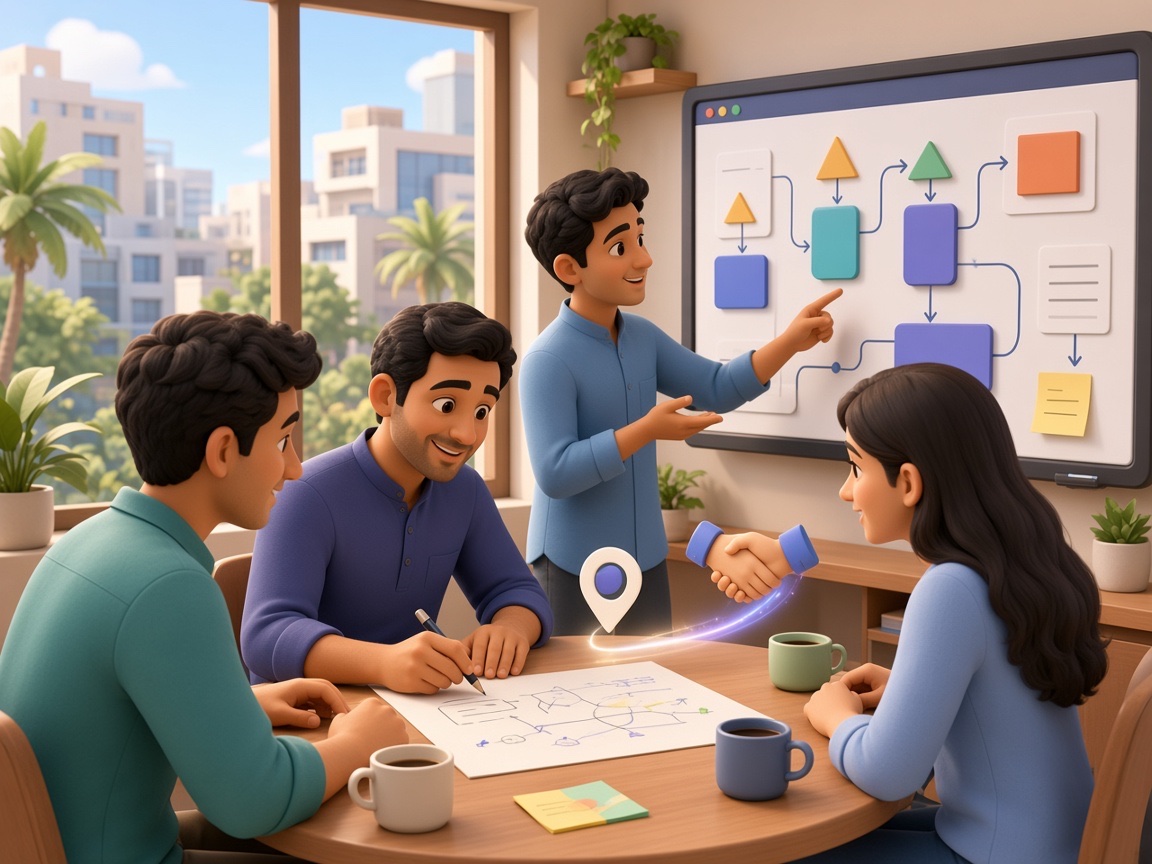
Working locally has practical advantages: requirement discussions can happen directly, sales workflows can be mapped accurately in person, and ongoing support doesn't involve delays. For businesses looking for a CRM Software Development Company in Navi Mumbai that understands the local business environment, we aim to be a straightforward, accessible development partner from the initial conversation through post-launch support.
Why Choose Swami Webcraft Solutions for CRM Development?

- Custom CRM software built around actual sales and customer workflows
- Scalable architecture designed to grow with the business
- Sales CRM development, lead management software, and enterprise CRM development under one roof
- Reliable database and API integration
- CRM customization and CRM automation for existing systems
- User-friendly interfaces for sales and support teams
- Structured testing and quality assurance before deployment
- Ongoing maintenance and support after launch
- A local presence in Vashi, Navi Mumbai, for direct communication and follow-up

CRM development is the process of building software that helps businesses manage leads, customer records, communication history, and sales pipelines from one centralized system, instead of relying on spreadsheets or disconnected tools.
Ready-made CRM tools offer a fixed set of features meant to suit many businesses at once, often with pricing tiers and unused modules. Custom CRM software development is built specifically around a business's own sales stages, customer categories, and reporting needs.
As a CRM Software Development Company in Vashi, our services span software development, integration, customization, sales-focused pipeline systems, lead management, customer management, workflow automation, cloud deployment, and enterprise-scale solutions.
Yes. Custom CRM systems can be integrated with accounting software, billing systems, inventory or ERP platforms, marketing tools, and payment gateways through API or database integration.
Yes. CRM software can be developed as a Windows desktop application for businesses that prefer local database control or need integration with on-premises systems, alongside cloud-based options for remote access.
Depending on the project, we work with C# / .NET, Python / Django, and React.js / Node.js, chosen based on the deployment environment, scale, and integration requirements of the CRM.
Cost depends on the features required, number of users, integrations needed, and overall project complexity. We recommend a requirement discussion to provide an accurate estimate for your specific project.
Timelines vary based on project scope; a simple lead management system may take a few weeks, while enterprise CRM development with multiple integrations can take longer. Timelines are typically finalized after requirement analysis.
Yes. We can assess existing CRM systems and provide CRM customization, added features, or improved integrations based on current business needs.
Conclusion
Custom CRM development isn't the right fit for every business, but for sales teams juggling leads across spreadsheets and messaging apps, it can bring the structure and visibility that generic tools don't provide. The right approach starts with understanding how the business actually sells and manages customers, its lead sources, its sales stages, its team structure and building around that. As a CRM Development Company in Navi Mumbai, we look forward to discussing how a custom CRM solution could work for your business.
Have a CRM Development Requirement? Let's Discuss Your Project.
Get in touch with our CRM Development Company in the Vashi team Swami Webcraft Solutions Pvt. Ltd.